
Journalist safety and reporting from tense environments: AMPEK training in Peja
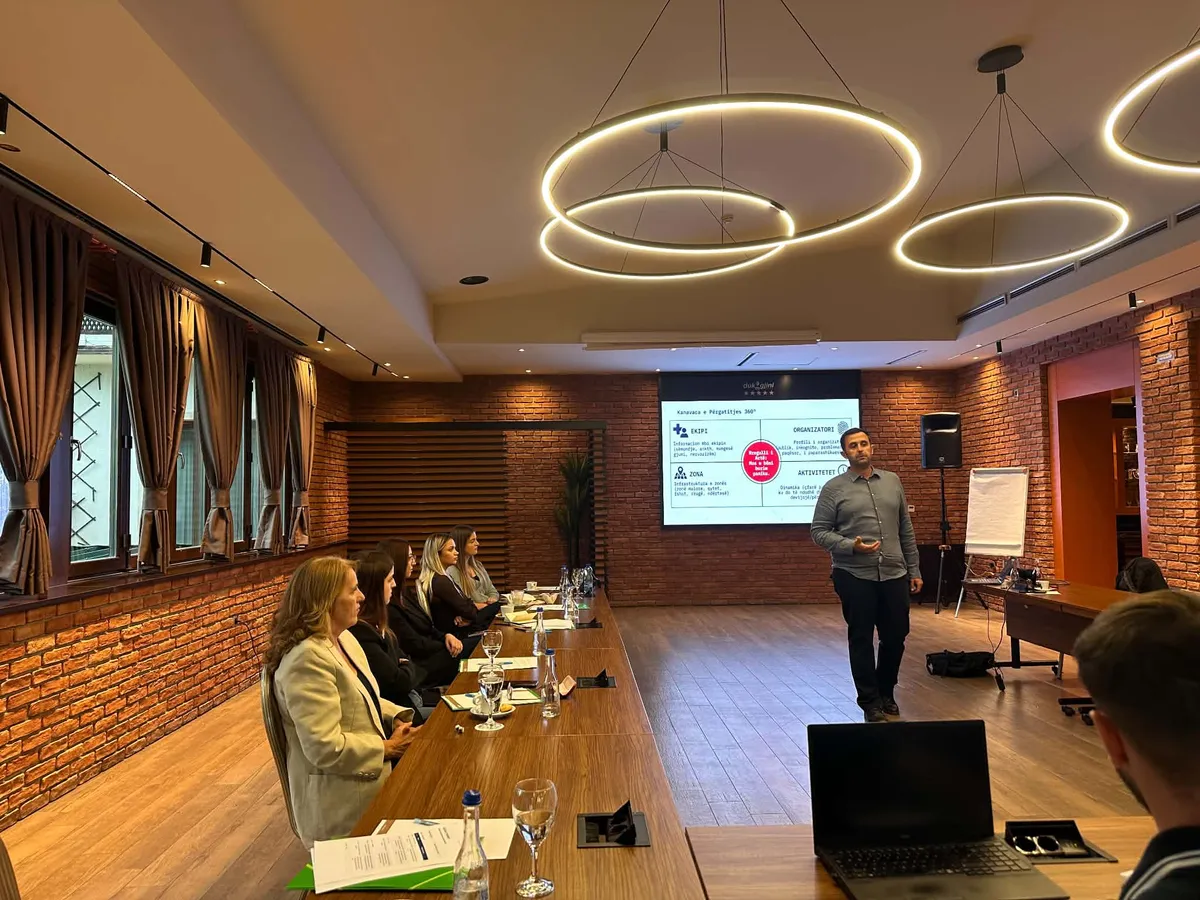
- Date
- 25–26 September 2026
- Venue
- Hotel Dukagjini, Peja, Kosovo
- Participants
- 12 journalists and editors from local and national media
- Supported by
- Fojo Media Institute – Linnaeus University
The training on “Journalist Safety and Reporting from Tense Environments – Safe and Professional Reporting” was organized by the Association of Independent Electronic Media of Kosovo (AMPEK), with the support of the Fojo Media Institute – Linnaeus University, and took place on 25–26 September 2026 at Hotel Dukagjini in Peja, Kosovo.
The training brought together twelve (12) journalists and editors from different local and national media outlets in Kosovo, with the aim of strengthening their practical knowledge and skills for identifying, assessing and managing risks encountered during field reporting, particularly when covering protests, public gatherings, tense situations and other potentially high-risk events.
A key insight from the activity was the importance of integrating safety considerations into every stage of journalistic work – from preparation and risk assessment before going into the field, to situational awareness and decision-making during an assignment, and to the protection of sources, information and data after reporting.
The sessions also highlighted the importance of journalists being able to recognize warning signs and changing circumstances, assess risks quickly and make informed decisions under pressure. Particular attention was given to protective measures when covering high-risk events and working in crowds, as well as to occupational health and safety obligations applicable to journalists.
The practical and interactive format of the training enabled participants to discuss real-life situations and examine mistakes that journalists may make when covering challenging events. Case discussions and practical exercises helped participants reflect on how risks can be identified earlier and how appropriate safety measures can be incorporated into their everyday work.
Another important area addressed during the training was source and whistleblower protection. Participants discussed the importance of protecting confidential sources when reporting on sensitive or high-risk issues, as well as the legal framework and institutional responsibilities related to journalist safety and the investigation of crimes against journalists.
What the training achieved
Overall, the activity contributed to:
- increasing participants’ awareness of physical and professional risks associated with field reporting;
- strengthening practical skills in risk identification, assessment and prevention;
- improving awareness of safety measures when covering protests, gatherings and tense situations;
- strengthening journalists’ understanding of occupational health and safety responsibilities;
- improving awareness of secure communication, source protection and information security;
- encouraging more careful and informed decision-making in high-risk reporting situations; and
- promoting a stronger safety culture within newsrooms and among individual journalists.
The training also created an opportunity for peer exchange and discussion of practical experiences, allowing participants to learn from each other and identify common challenges faced by journalists working in the field.
Photos · 04